Mobile App Development Cost: Complete Guide [Updated for 2026]

The mobile app domain in 2026 is defined by a rapid convergence of agentic AI, hyper-connectivity via 6G networks, and immersive spatial computing. All of them fundamentally reshape the financial parameters of software engineering. As businesses transition from static digital tools to intelligent, predictive ecosystems, the mobile app development cost is no longer just a reflection of coding hours. It is a complex aggregate of strategic design, data infrastructure, and regulatory compliance.

In summary, the cost to build a competitive mobile application in 2026 typically ranges from $40,000 to $400,000. Enterprise-grade, AI-native platforms frequently exceed $500,000.

How much does it cost to develop an app?

App ComplexityEstimated Cost RangeDevelopment TimelineKey Characteristics
Basic / MVP$40,000 – $100,0003 – 6 MonthsCore functionality, standard UI components, minimal backend, single platform or simple cross-platform.
Moderate$100,000 – $200,0006 – 9 MonthsCustom UI/UX, API integrations (Payment, Maps), backend infrastructure, basic interactive features.
Advanced$200,000 – $400,0009 – 12 MonthsReal-time data sync, high security, advanced backend logic, custom animations, multi-language support.
Enterprise / AI$400,000+12 – 18+ MonthsAI/ML integration, microservices, high concurrency, strict compliance (HIPAA/GDPR), multi-platform.

According to experts, the baseline investment for professional mobile app development in 2026 typically falls between $40,000 and $400,000. Highly specialized or innovative platforms can easily surpass this range. The mobile app development cost is a dynamic figure, heavily dependent on the:

  • Functional density of the product;
  • Chosen technology stack;
  • Geographic location of the engineering team.

In 2026, the market is segmented into four distinct tiers of complexity, each with its own financial profile.

What influences the cost of developing a mobile application?

The final price tag of a digital product is the aggregate of numerous technical and strategic decisions, ranging from the architectural foundation to the pixel-perfect details of the user interface. Understanding the variables that inflate or optimize the app development cost allows stakeholders to allocate resources efficiently and avoid budgetary surprises.

App Complexity and Features

The primary driver of development costs is the functional complexity of the application. It dictates the number of engineering hours required. Simple apps with static content and basic navigation require significantly fewer resources than those with dynamic, real-time features. For instance, implementing a standard email login system might cost around $1,000, whereas integrating a biometric authentication system compliant with 2026 financial regulations could cost upwards of $10,000.

Platform: iOS, Android, or Both

The decision to build for Apple’s ecosystem, Google’s ecosystem, or both fundamentally shapes the budget and the technical approach. Historically, the iOS app development cost was slightly higher due to strict App Store guidelines and the premium on Swift developers. Still, fragmentation in the Android market now balances the scales, often making Android app development cost comparable due to the testing required across hundreds of device variants.

UI/UX Design Requirements

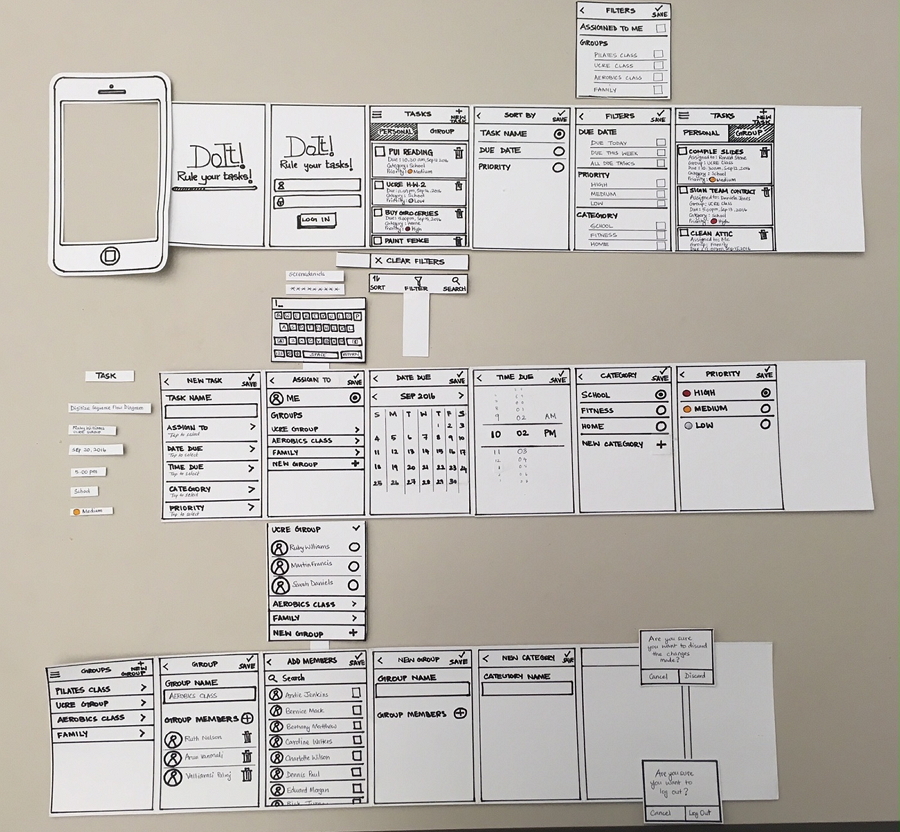
The cost for app development heavily depends on the number of screens and the fidelity of the prototypes required. High-end design involves:

  • Extensive user research;
  • Wireframing;
  • Usability testing.

These are investments in user retention rather than just visual appeal. In 2026, trends like “spatial design” (depth and 3D elements) and advanced haptic feedback design are becoming premium requirements that drive up the app development cost breakdown but significantly improve user engagement.

Backend Development

The invisible engine of any mobile app is its backend—the server-side infrastructure that manages data, users, and business logic. A simple backend using “Backend-as-a-Service” (BaaS) solutions like Firebase is cost-effective for startups, keeping initial costs low. However, enterprise applications require custom backend architectures, often using microservices and cloud infrastructure (AWS, Azure, Google Cloud).

Third-Party Integrations

Integrating a standard payment processor like Stripe is straightforward, but integrating a legacy banking system for a fintech app or a complex Electronic Health Record (EHR) system for a healthcare app requires substantial security layers and custom middleware. These deep integrations drive up the app development cost breakdown significantly. In 2026, integrating with decentralized finance (DeFi) wallets or blockchain identity systems is also becoming a common, albeit complex, requirement.

Security Requirements

Implementing HIPAA-compliant architecture or multi-factor authentication (MFA) adds significant overhead. The cost of app development in regulated industries must include budget lines for regular security audits, secure code implementation, and “DevSecOps” processes to prevent data breaches. The custom app development cost for a high-security fintech app can be 20-30% higher than a non-sensitive app solely due to these rigorous protection measures.

Development Team Location & Expertise

The geographical location of the development team remains one of the most significant cost variables in the global market. Hourly rates for developers vary drastically by region, reflecting differences in the cost of living and economic maturity.

How much does it cost to develop an application based on a unique idea?

Developing an application based on a novel concept often entails a higher degree of uncertainty and, consequently, a more flexible budget structure to accommodate research and discovery. Unlike cloning an existing business model, a unique idea requires a dedicated Discovery Phase, which involves prototyping, market research, and technical feasibility studies to validate assumptions before writing code.

According to our experts, this initial phase alone can cost between $10,000 and $25,000 but is essential for minimizing risk and refining the product roadmap. For a unique concept, the mobile app development cost is driven by the need for custom logic and bespoke algorithms that do not exist in off-the-shelf libraries. An MVP for a unique idea usually starts at around $50,000, allowing the core value proposition to be tested in the market.

Following validation, the full-scale development can scale rapidly. For innovative startups, the cost of app development often includes iterative cycles of user testing and feature refinement, meaning the budget must account for agility. Investors typically look for a well-structured app development cost breakdown that prioritizes the unique selling points (USPs) of the idea over generic features.

What is the average cost of developing the most common types of mobile apps?

To provide a concrete perspective on the financial requirements for 2026, we break down the costs associated with specific industry verticals.

Real Estate App

The real estate app development cost has stabilized in the range of $40,000 to $250,000, depending on the sophistication of the tool and the depth of data integration. A basic real estate app, featuring property listings, search filters, and contact forms, typically costs between $40,000 and $70,000. However, the modern market demands more interactive experiences.

Mid-level applications that include interactive maps, user profiles, and mortgage calculators range from $70,000 to $120,000. The highest tier, where the real estate app development cost reaches $150,000 to $250,000+, involves immersive technologies. Features such as Augmented Reality (AR) for virtual property tours, AI-driven property recommendations based on user behavior, and secure document signing integrations significantly drive up the price. In 2026, the real estate app development cost also factors in backend complexity for real-time synchronization with MLS (Multiple Listing Service) databases to ensure data accuracy.

Food Delivery App

The food delivery app development cost is structurally higher because it involves a multi-app ecosystem: a customer-facing app, a restaurant partner app, and a driver logistics app, all tied together by a central admin panel. The complexity of synchronizing these three interfaces in real-time drives the baseline cost.

A basic MVP for a local delivery service starts around $40,000 to $80,000. However, a competitive solution similar to Uber Eats or DoorDash will see the food delivery app development cost rise to $80,000–$150,000. This budget covers features like real-time GPS tracking, payment gateway integration, and order status updates. Advanced systems that utilize AI for route optimization, demand forecasting, and personalized menu recommendations can push the food delivery app development cost well over $200,000. The backend infrastructure required to handle high-concurrency order processing is a major cost center in this category.

E-commerce App

In the retail sector, the e-commerce app development cost varies wildly based on inventory size and feature set. A simple storefront app for a single brand, with a product catalog, shopping cart, and checkout, ranges from $30,000 to $60,000.

For multi-vendor marketplaces or large-scale retail apps, the e-commerce app development cost typically falls between $70,000 and $200,000. Key cost drivers include advanced search engines (using Elasticsearch or Algolia), multiple payment gateway integrations, and robust user review systems. In 2026, the e-commerce app development cost is increasingly influenced by “social commerce” features, live video shopping, and AI-powered personalization engines that curate product feeds for individual users. Security for handling credit card transactions (PCI-DSS compliance) is also a critical component of the budget.

AI-Powered App

The AI app development cost is the most variable category in 2026 due to the spectrum of “AI” definitions—from simple chatbots to complex generative models. A basic app that integrates pre-trained APIs (like OpenAI’s GPT-4 or Gemini via API) for text or image generation starts at $40,000 to $80,000.

However, building a custom AI solution involving proprietary machine learning models, data cleaning, and training infrastructure drives the AI app development cost significantly higher, often between $100,000 and $300,000+. Factors influencing the AI app development cost include the computational power required for inference, the volume of data for training, and the ongoing costs of API tokens or cloud GPU usage. Applications requiring on-device AI (Edge AI) for privacy and speed also command a premium due to the specialized engineering skills required to optimize models for mobile processors.

Telemedicine App

The healthcare app development cost (often encompassing telemedicine features) is heavily influenced by regulatory compliance and security standards. A telemedicine app facilitating video consultations, prescription management, and patient records must adhere to HIPAA (in the US) or GDPR (in Europe). The cost to build a compliant MVP starts at $60,000 to $100,000.

For full-featured platforms integrating with Electronic Health Records (EHR) systems, wearable device data (IoT), and AI diagnostic support, the telemedicine app development cost can range from $150,000 to $400,000+. Security architecture is the largest single cost factor here, as data breaches carry massive legal penalties. The healthcare app development cost also includes rigorous QA testing to ensure zero failure rates in critical health monitoring features.

Grocery App

Similar to food delivery, grocery apps require complex logistics management but with added inventory depth. A grocery app must handle vast inventories with thousands of SKUs, real-time stock updates, and delivery scheduling. The grocery app development cost typically ranges from $60,000 to $200,000. The upper end of this range includes features like barcode scanning for easy reordering, AI-based substitution suggestions for out-of-stock items, and complex delivery route planning algorithms.

Social Media App

Developing a social media app involves creating high-performance feeds, handling media uploads (video/image compression), and managing real-time interactions (likes, comments, chat). The social media app development cost for an MVP for a niche network starts between $50,000 and $100,000. However, a scalable platform capable of handling millions of concurrent users with features like live streaming, stories, and content moderation algorithms can cost upwards of $300,000. The backend infrastructure for data storage and content delivery networks (CDNs) represents a significant portion of both the initial and ongoing app development cost breakdown.

How to estimate the cost of developing an application without specifications?

Estimating the app development cost breakdown without a detailed specification document is challenging but possible using a “Rough Order of Magnitude” (ROM) approach. This method involves categorizing the project based on high-level requirements and applying industry-standard metrics to derive a ballpark figure.

The step-by-step breakdown is to use the formula:

  • $$Total Cost = Estimated Hours x Hourly Rate

To apply this, stakeholders should first categorize the app size:

  • Small App (MVP). Typically requires 500–1,000 development hours. Features include standard login, simple data display, and minimal backend.
  • Medium App. Requires 1,200–2,000 hours. Includes custom UI, API integrations, and moderate backend logic.
  • Large App. Requires 2,500+ hours. Involves complex backend, real-time features, multi-platform support, and high security.

Next, apply the hourly rate based on the target development region. For example, a medium app (1,500 hours) developed by a US team ($150/hr) would cost approximately $225,000. The same app developed by a team in Eastern Europe ($60/hr) might cost $90,000.

Another method is feature-based estimation. By assigning a price tag to common modules (e.g., Login = $2,000, Payment Integration = $5,000, Chat = $10,000) and summing them up, one can derive a ballpark figure. However, this often overlooks the “glue code” and project management overhead, so adding a 20-30% buffer for project management and QA is recommended.

Finally, consider the iPhone app development cost and Android app development cost nuances. If the goal is to launch on both platforms without specifications favoring one, assuming a cross-platform approach (Flutter/React Native) is the safest bet for estimation, typically costing 1.3x the cost of a single native app rather than 2x. This rough estimation allows businesses to secure initial funding before diving into the granular details of a full specification phase.

Why Partner with OS-System Developers?

Choosing a custom app development cost model with OS-System ensures access to a multidisciplinary team comprising solution architects, UI/UX designers, DevOps engineers, and QA specialists. Our team uses established methodologies (Agile/Scrum) to deliver predictable results, mitigating the risks of budget overruns and timeline slippage. Furthermore, we are well-versed in the latest compliance standards (HIPAA, GDPR) and security protocols, ensuring that the cost for app development includes robust protection against liabilities.

Feel free to contact us for a consultation.

Conclusions

The mobile application market continues to mature, demanding higher quality, faster performance, and smarter features. The mobile app development cost varies widely, typically resting between $40,000 for foundational tools and scaling beyond $400,000 for comprehensive, AI-integrated enterprise ecosystems.

In summary, key takeaways from this analysis include:

  • Complexity is the main cost driver. The depth of features, from AI recommendation engines to real-time data sync, dictates the budget more than any other factor.
  • Platform strategy matters. Choosing between native iOS app development cost, native Android app development cost, or cross-platform solutions is a strategic financial decision. Cross-platform technologies offer a balanced route for many businesses.
  • Hidden costs are real. A comprehensive app development cost breakdown must include post-launch maintenance, third-party API fees, and marketing. They can equal 15-20% of the build cost annually.
  • Industry-specific variances. A healthcare app development cost will naturally be higher than a standard utility app due to compliance, just as an AI app development cost will carry a premium for data infrastructure.
  • Investment in quality pays off. While the custom app development cost may seem high initially, the long-term benefits of scalability, security, and user retention provide superior ROI compared to off-the-shelf or low-quality solutions.

Ultimately, successful app development in 2026 requires viewing the cost for app development not as an expense, but as a strategic investment in digital transformation. By carefully estimating the iPhone app development cost and Android equivalents, and partnering with experienced developers, businesses can navigate the complexities of the market and deliver powerful, user-centric mobile experiences.

Loading

CONTACT US

THANK YOU,
VLAD ABAKUMOV,
WE WILL GET BACK TO YOU SOON

Your Email has been sent! We appreciate you reaching out and are stoked about the opportunity to work together. Stay tuned and we will get back to you soon.